 Book a Meeting
 Chat on WhatsApp

Published in:
Event Management
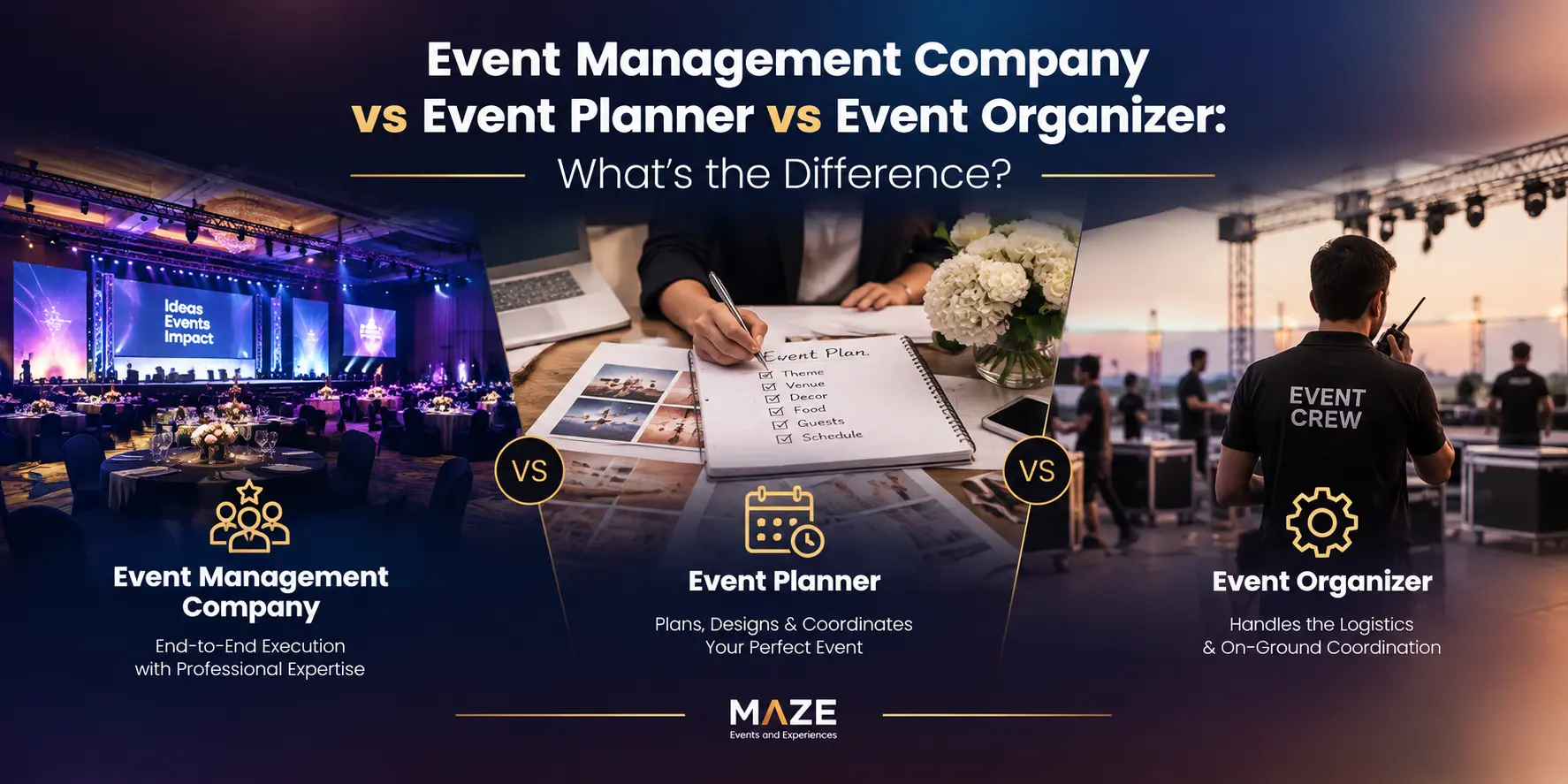
Event Management Company vs Event Planner vs Event Organizer: What’s the Difference?

What Is Corporate Event ROI?
Businesses across India and the UAE often use the terms event management company, event planner and event organizer as if they mean the same thing. In practice, the scope of work behind each title can differ quite a bit depending on who you hire.
- Event Planner: works on planning, strategy, concept and coordination
- Event Organizer: manages logistics and coordinates execution
- Event Management Company: can offer broader end-to-end planning, production, logistics and event execution
None of these titles are standardised across the industry, so it pays to look past the label and check the actual services and responsibilities listed in a proposal before you sign anything.
What Does an Event Planner Do?
An event planner is usually involved from the earliest stage of an event, when the idea is still taking shape. Their work typically covers:
- Event concept development
- Setting event objectives
- Budget planning
- Timeline development
- Venue research
- Guest experience design
- Theme and creative direction
- Vendor selection
- Program planning
- Speaker coordination
- Event communication
When Should You Hire an Event Planner?
An event planner is a good fit for:
- Corporate meetings
- Small conferences
- Employee events
- Private business events
- Product launches
- Brand experiences
What Does an Event Organizer Do?
An event organizer generally picks up where planning ends and execution begins. Common responsibilities include:
- Venue coordination
- Vendor coordination
- Event logistics
- Registration
- Guest management
- Production coordination
- On-site team management
- Event-day schedules
- Technical coordination
- Troubleshooting
- Post-event coordination
What Does an Event Management Company Do?
A full-service event management company can potentially combine all the pieces: strategy, planning, creative, vendors, production, logistics, on-site execution and post-event reporting.
Typical coverage includes:
- Event strategy
- Budget management
- Creative concept
- Venue management
- Vendor management
- Event production
- Stage and AV
- Branding
- Registration
- Guest management
- Logistics
- On-ground execution
- Risk and contingency planning
- Post-event analysis
Key Differences at a Glance
| Area | Event Planner | Event Organizer | Event Mgmt Company |
|---|---|---|---|
| Event strategy | Yes | Sometimes | Yes |
| Concept development | Yes | Sometimes | Yes |
| Budget planning | Yes | Yes | Yes |
| Venue coordination | Yes | Yes | Yes |
| Vendor management | Yes | Yes | Yes |
| Event production | Sometimes | Yes | Yes |
| On-site execution | Sometimes | Yes | Yes |
| Technical production | Sometimes | Often | Yes |
| Risk management | Sometimes | Yes | Yes |
| Post-event reporting | Sometimes | Sometimes | Yes |
| End-to-end management | Depends | Depends | Often available |
What Is the Difference Between Event Planning and Event Management?
A simple way to separate the two:
Planning answers the question: what should happen?
Management answers the question: how will everything happen successfully?
Planning creates the event roadmap: the concept, the budget, the timeline and the guest experience. Management coordinates the people, vendors, production and logistics needed to actually deliver that roadmap on the day. A corporate offsite, for example, might be planned around a theme and a budget, but it still needs a team on-site managing vendors, schedules and unexpected changes to run smoothly.
Event Organizer vs Event Management Company
When comparing an event organizer and an event management company, look at:
- Scope of services
- Team size
- Production capability
- Vendor network
- Event complexity they can handle
- On-site responsibility
- Accountability structure
- Reporting after the event
- Ability to meet corporate
- compliance and approval requirements
Which Event Professional Should You Hire?
Choose an Event Planner If:
- You already have an internal execution team
- You mainly need strategy and planning support
- The event scope is relatively straightforward
- You need creative direction more than operational support
Choose an Event Organizer If
- You need logistics and coordination support
- Multiple vendors are involved
- Event-day execution is complex
- You need dedicated on-site operational support
Consider a Full-Service Event Management Company If:
- You need planning and execution together
- Multiple vendors are involved
- Technical production is required
- You are hosting a large corporate audience
- You want one accountable project team
- You want planning, production and execution under a single scope
Which Service Is Right for Different Corporate Events?
| Event Type | Typical Support Required |
|---|---|
| Corporate conference | Planning and management |
| Annual day | Planning, production and execution |
| Product launch | Creative, production and management |
| Exhibition | Exhibition planning, production and lead management |
| Brand activation | Creative, activation and execution |
| MICE event | Planning, logistics and delegate management |
| Employee engagement event | Planning and execution |
| CSR event | Planning, logistics and execution |
| Sports event | Operations, logistics and on-ground management |
Services to Check Before Hiring an Event Management Company
Before signing a proposal, confirm whether the company covers:
1. Event strategy
2. Creative concept
3. Budget planning
4. Venue sourcing
5. Vendor management
6. Production
7. Stage design
8. AV and technology
9. Branding
10. Guest management
11. Logistics
12. Event-day operations
13. Risk management
14. Post-event reporting
How Much Does an Event Planner or Event Management Company Cost?-
There is no fixed price that applies across the board. Cost depends on several factors:
- Event type
- Number of attendees
- Venue
- Production requirements
- Catering
- Branding
- Entertainment
- Technology
- Logistics
- Event duration
- Number of locations
- Vendor requirements
What Should Be Included in an Event Management Quote?
A clear quote should break down:
- Planning fee
- Production costs
- Vendor costs
- Staffing
- Logistics
- AV
- Branding
- Taxes
- Contingency
- Post-event services
Event Planner vs Event Organizer vs Event Management Company: What Should You Choose?
A simple decision framework:
- Need strategy? Go with a planner.
- Need logistics and execution? Go with an organizer.
- Need planning, production and execution together? Go with a full-service event management company.
FAQs
An event planner focuses on strategy, concept and budget, while an event organizer focuses on logistics, vendors and on-site execution.
Event planning covers what should happen, while event management covers how it will happen successfully, including vendors, production and on-ground coordination.
A full-service event management company can combine strategy, planning, creative, vendor management, production, logistics, on-site execution and post-event reporting.
An event planner develops the event concept, sets objectives, plans the budget and timeline, and coordinates vendors and speakers.
An event organizer coordinates venues, vendors, registration, guest management and on-site execution.
Not always. An event planner typically focuses on the planning stage, while an event manager or event management company usually also handles execution.
An event manager often oversees the entire process end-to-end, while an event organizer is typically more focused on logistics and on-site coordination.
If you need strategy and concept support with your own execution team in place, an event planner may be enough. If you need planning and execution together, a full-service event management company is usually a better fit.
Yes. Most full-service event management companies include event planning as part of their overall scope of work.